Choose your flavour
Who are you hunting with today?
Case study · Brighton · 4 August 2026
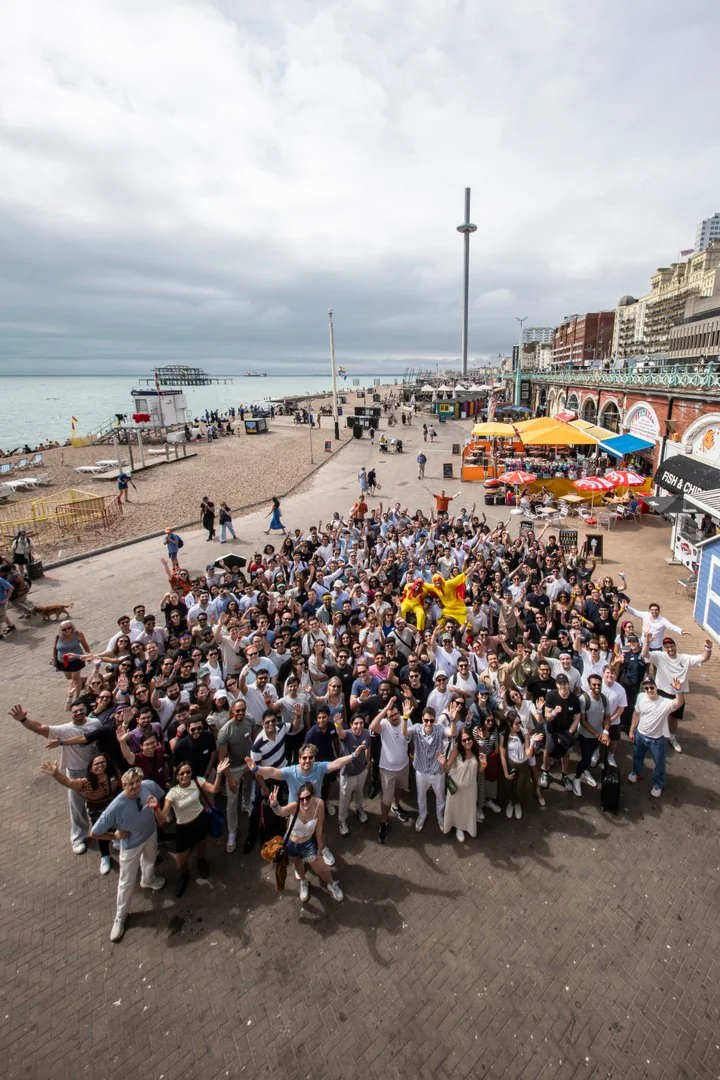
An international MBA cohort, aged 25-39, needed a fun activity that would get everyone involved. We put on the ultimate icebreaker to kick it all off.
300
players, one game
300
Players
30
Colour-coded teams
8
Chicken Rush crew
2hrs
Hunt duration
The cohort had a lunch booked on Brighton seafront and we need to pull off the ultimate icebreaker. We had 300 players, a lot of whom had just met, and one mission: to make everyone get to know each other while having a huge amount of fun in the process.
They also had constraints that rule out most activities at this size. No venue in Brighton holds 300 people doing an activity where everyone is competing. Splitting into ten separate activities would defeat the point. And whatever happened had to start straight off the back of lunch, so we needed a quick start and everyone to prompty convene at the hiding spot for their day to continue on after.
So we used the city as our playground. Every pub, lane and stretch of seafront in central Brighton became part of the game - and the whole cohort came together for the final results and celebrations.
Brighton · 4 August 2026
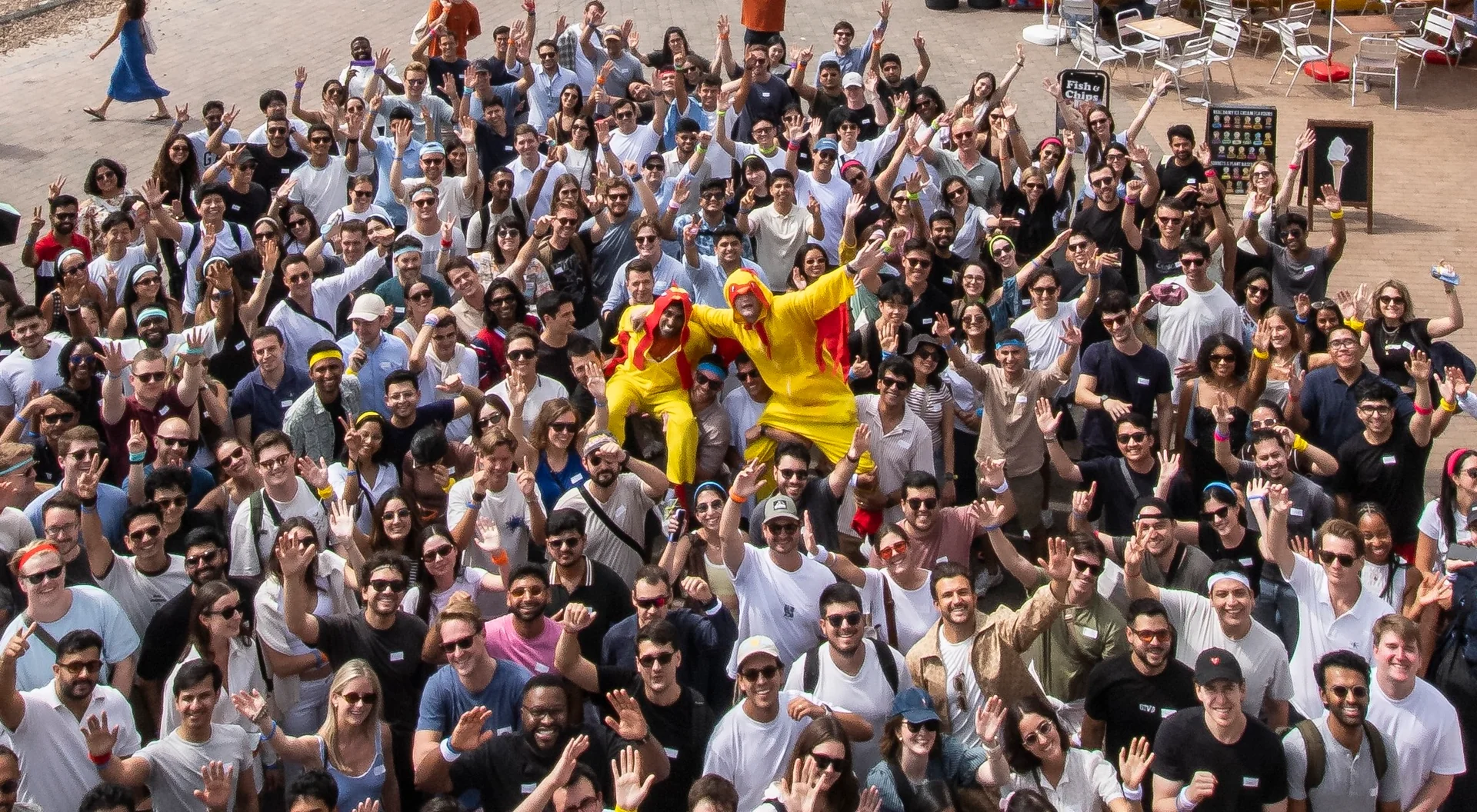
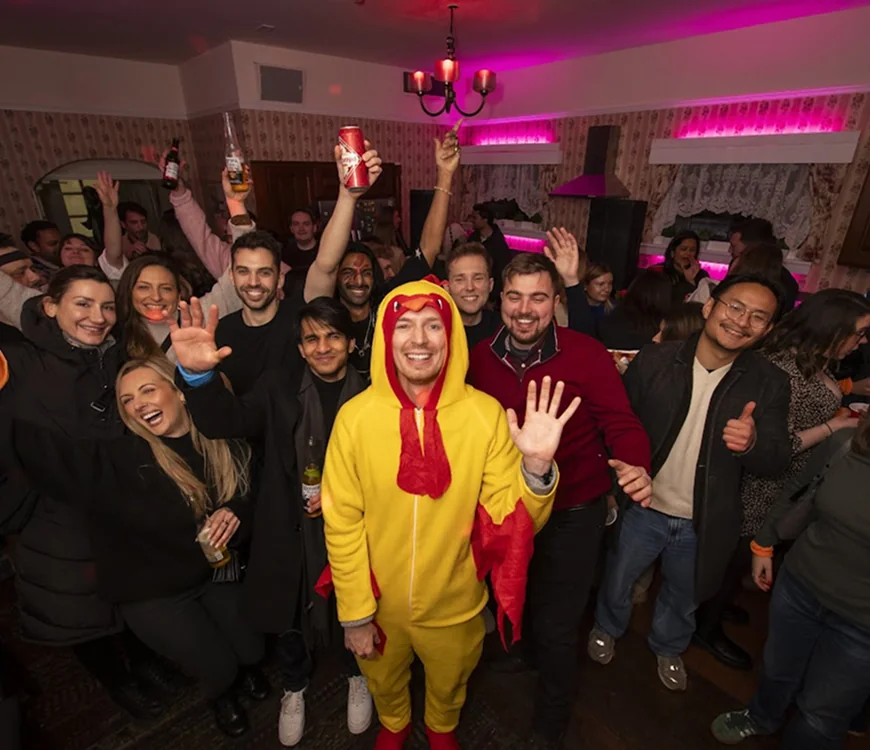
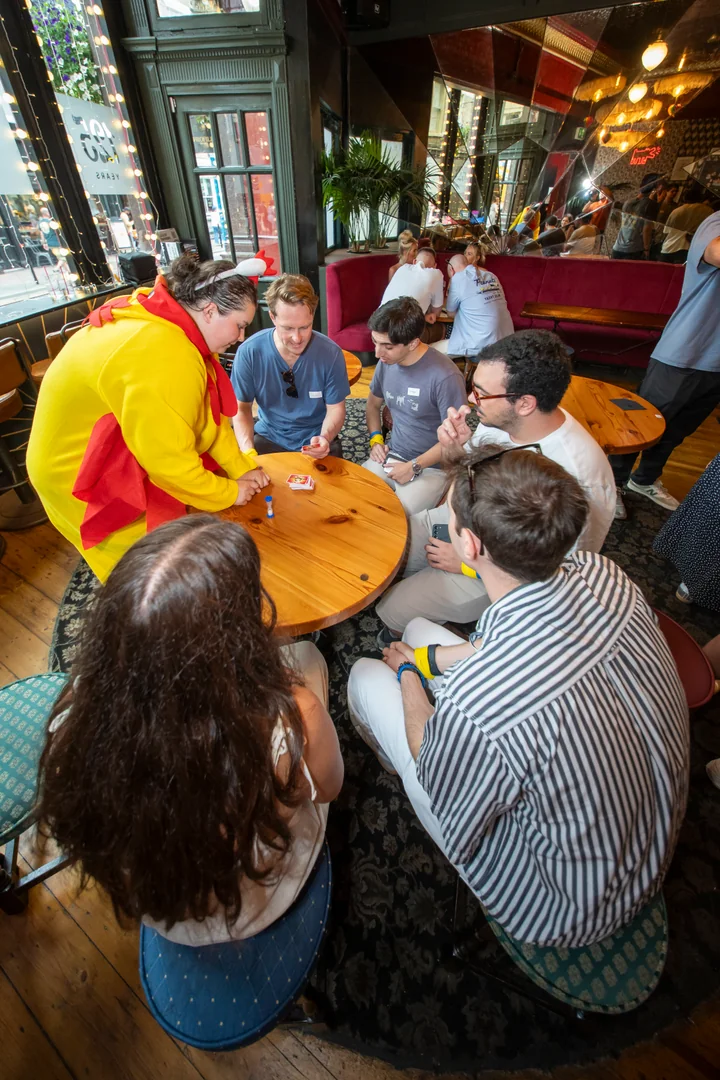
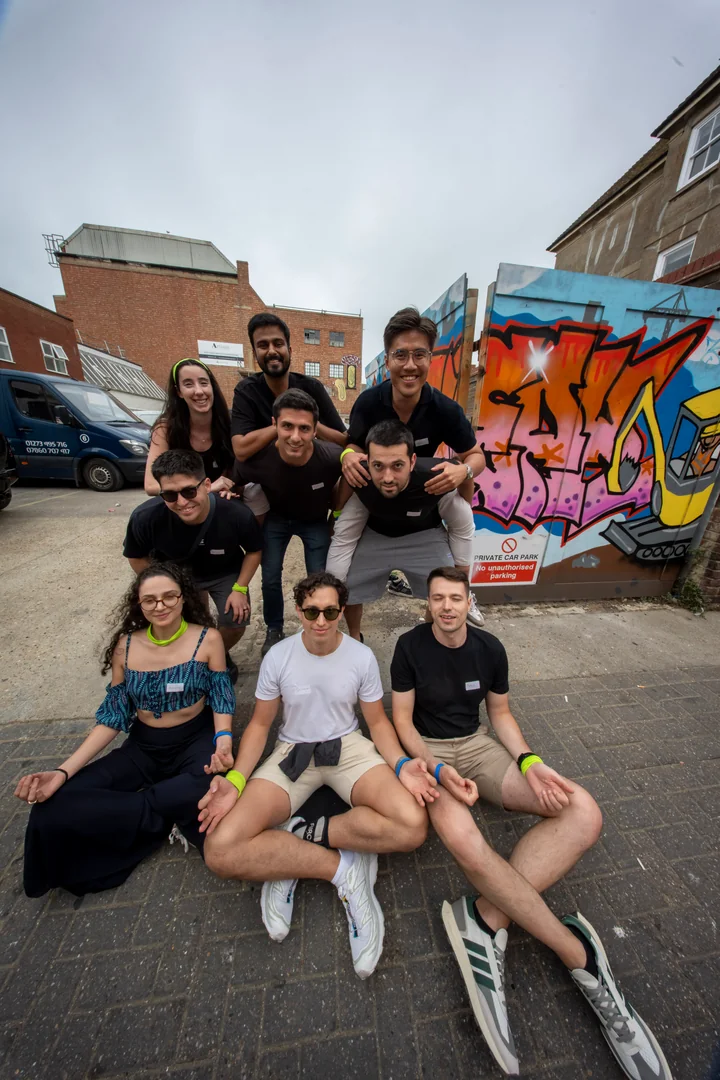
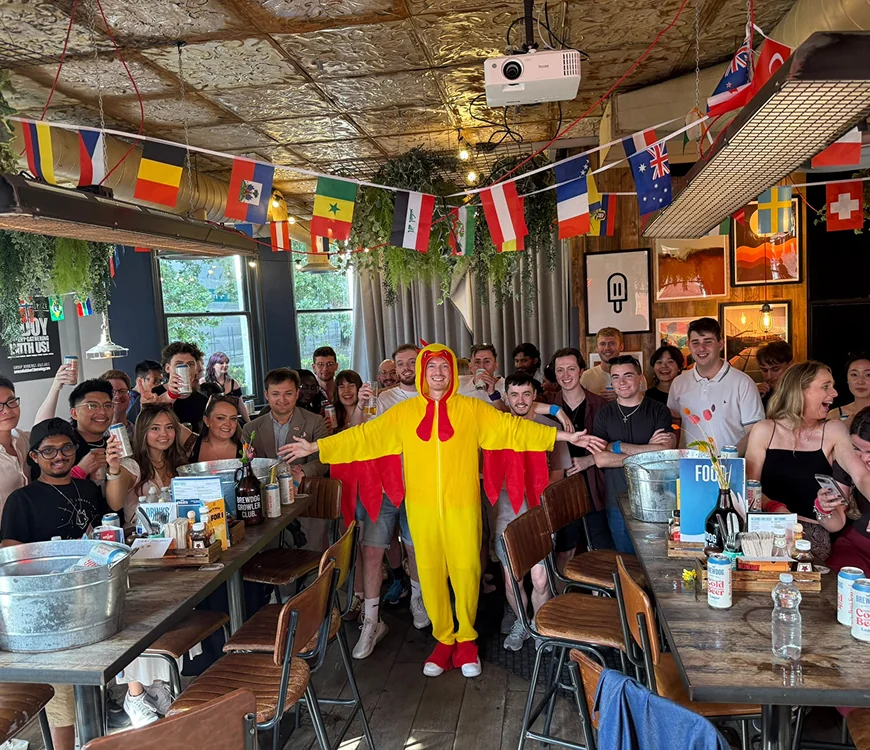
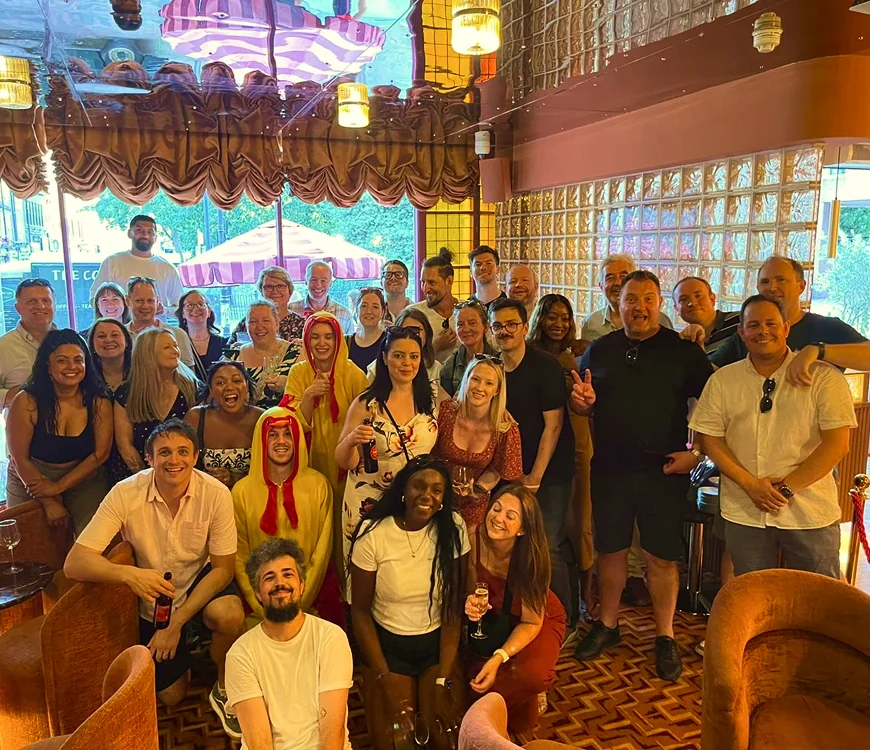
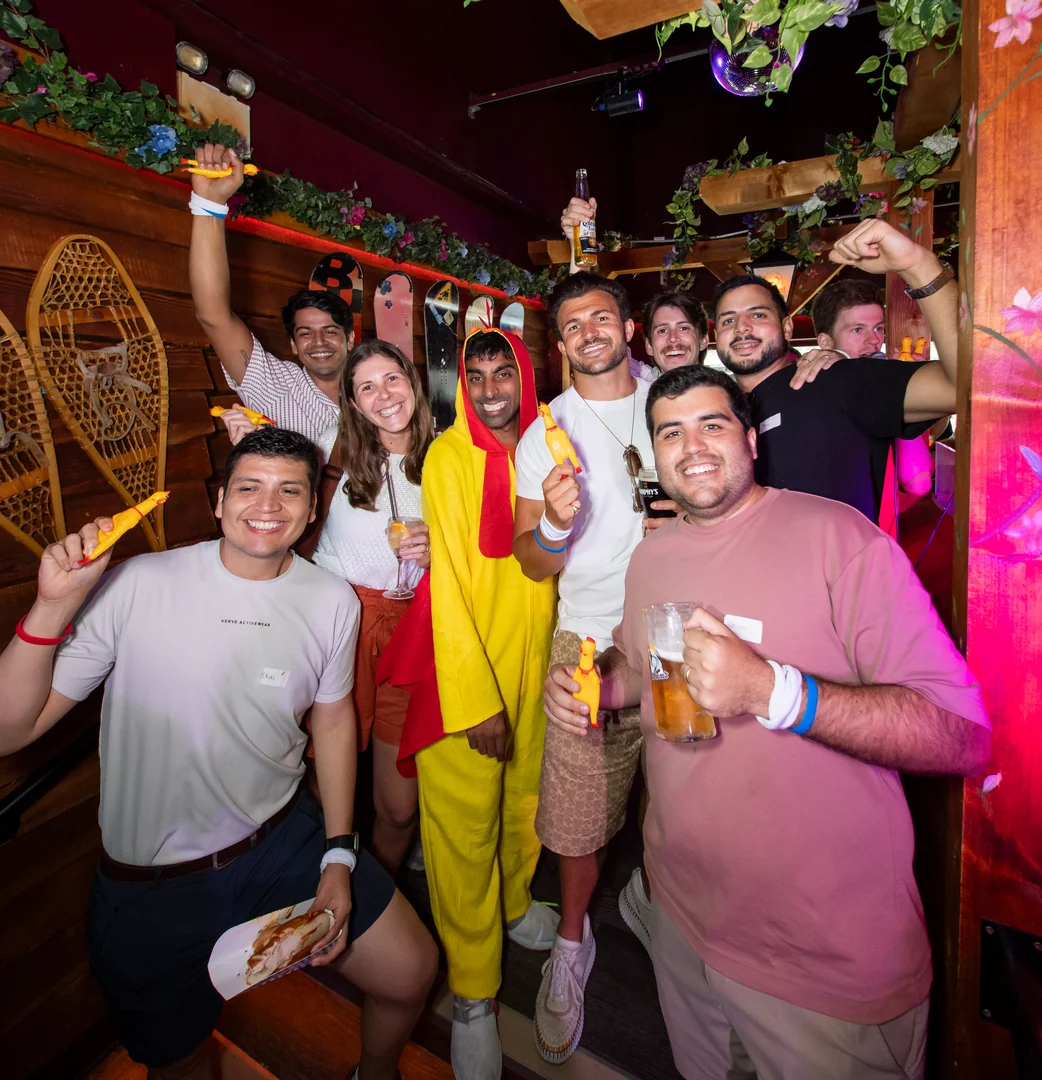
From the end of their lunch to the final venue, in under three hours.
13:45 — 14:10
The cohort's lunch was still running and the organisers wanted people mingling while registration began. So we stayed a little incognito: our crew circulated, placed QR codes around the venue and players began registering on their own phones.
14:10 — 14:30
Our host announced on a microphone the rules of the game and that it was about to begin. Each crew member was "buddied" to specific teams - their job was to make sure every single person in those teams was registered, in the game, and had found their teammates.
14:30
Two Chickens hid somewhere in central Brighton. On every player's phone, a circle appeared over the city and started shrinking every 2 minutes. A tutorial also displayed for those who missed anything said on the microphone earlier.
14:30 — 16:20
Scattered across the city were our decoys - "fake Chickens" that ran live challenges. One pair ran a 30-second category speed round; another ran a nerve-shredding higher-or-lower card game where gambling (of points) was encouraged. Teams also picked up weapons and power-ups from nests on the map to sabotage each other. Every submission came back to our scoring HQ and was scored on a live leaderboard.
16:20 — 16:30
The circle closed, the Chicken was found, and 300 people converged on the final venue within minutes of each other - which is the whole trick. The game doesn't just end, it deposits the entire cohort into one room, buzzing, mid-argument about who cheated, bribed or genuinely excelled in the hunt. Here is where the actual mixing happens.
Most team-building activities quietly break somewhere between 50 and 100 people. Here's what we build differently for groups this size - and what we'd bring to yours.
📶
We check mobile data speeds on site before anything starts. The game is built to stay playable on a congested network and handle a huge amount of traffice from so many players. This hunt only used 10% of our servers' capacity.
🎨
Every crew member owns specific team colours. At 300 players nobody can watch everyone, so we cut the crowd into chunks small enough that each one has a named human responsible for it. Everyone feels looked after and ready to go.
⚡
Players join on their own phones by scanning a code. No kit to hand out, no sign-in desk, no 40-minute bottleneck. It's the single biggest reason large hunts start on time when large activities usually don't.
🏙️
No room hire big enough? Doesn't matter. We only need a start point and an end point - the two hours in between happen across the whole city centre. That removes the single hardest constraint on booking a big group activity.
🎯
Challenge submissions are graded by a scoring team as they land, so the leaderboard is live all afternoon and the winners are known the second the game ends. We also hide the leaderboard 10 minutes before the end for extra spice.
📸
We had over 700 photos and videos taken from the hunt. There were over 450 photo and video submissions from teams as part of the challenges, as well as 300 snaps from our professional photographer (@capturedbytudor)
We've run games for 4 people, all the way up to 300. Tell us the city, the date and the headcount, and we'll come back with a plan - including venue finding for the start and finish.
Planning something festive? See our Christmas party hunts.



We're a friendly flock of real humans, with swift replies.
The fastest way to reach us is a quick WhatsApp. Pop us a message and we'll get right back to you.
Message usOr if you'd rather…